
Educational guidance only. Pelvic Floor Practice shares general information about pelvic floor exercises and everyday self-care for men in Indonesia — it is not medical advice, diagnosis, or treatment.

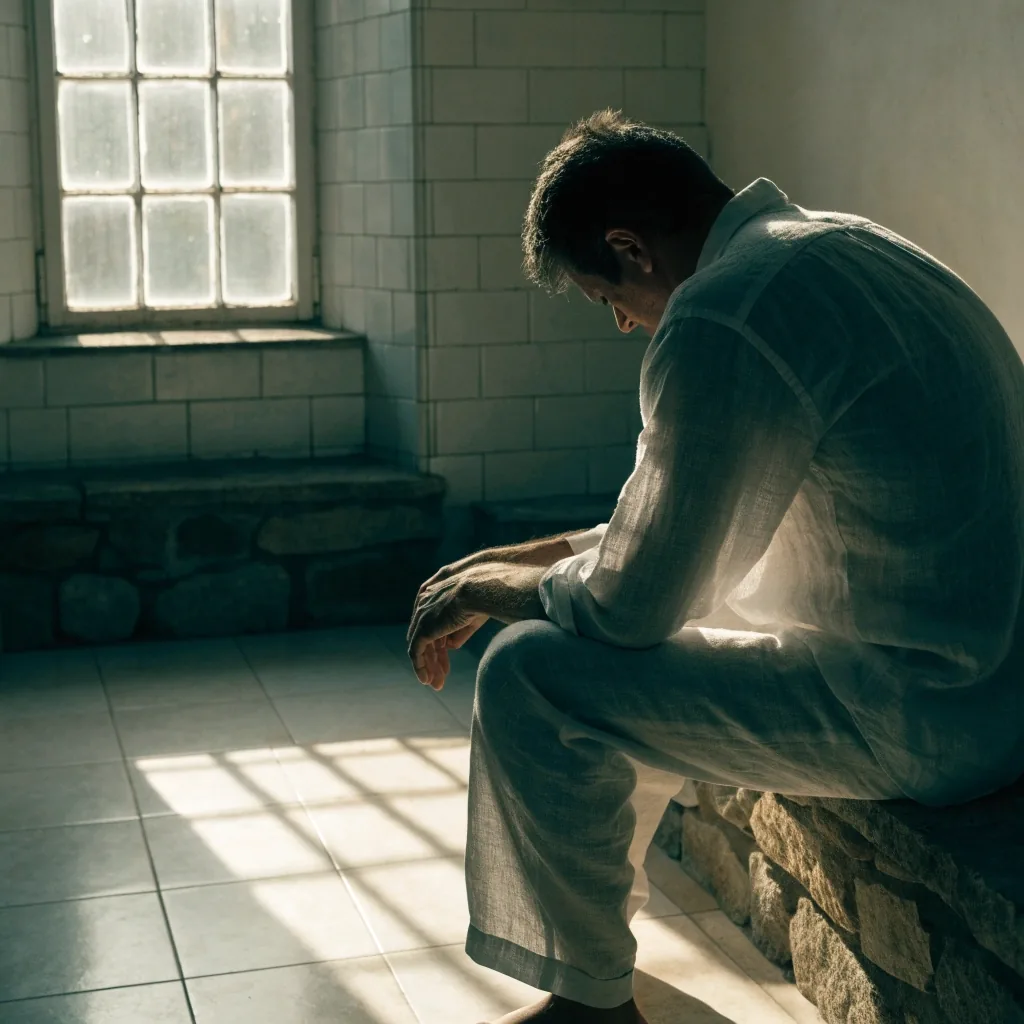
A man seated on a stone bench by a window in soft morning light, hands resting on his knees

Building a Weekly Pelvic Floor Routine That Sticks

A routine only counts if you actually do it, so this page is built around a week that fits into ordinary days rather than an ideal week that does not. You will find a starting structure, the difference between slow holds and quick squeezes, and where the rest days go.

How this page works

The three-session day

The most common structure in male pelvic floor guidance is three short sessions spread across the day, which Memorial Sloan Kettering's patient instructions describe as 10 repetitions at least three times daily. Three sessions sounds heavy until you time one: it runs under two minutes.

The trick is attaching each session to something you already do, such as after brushing your teeth, during a mid-morning break, and before bed. Spread them out. Three sessions in ten minutes is not the same as three across a day.

Morning

Right after brushing your teeth, before the day starts moving.

Midday

At your desk or in the parked car during a mid-morning break.

Evening

On the edge of the bed before sleep, lights already low.

Two kinds of practice

Slow holds and quick squeezes train different things

Keep them separate in your head even when they share a session. One builds staying power; the other builds reaction speed.

Slow holds

A slow hold is a gentle squeeze held for several seconds while you keep breathing, followed by an equal rest. These train endurance, the ability of the muscle to stay switched on while you cough, lift, or stand for a long stretch.

Start with three-second holds and three-second rests. If you have been practising for a few weeks and the holds feel controlled, extend toward five seconds, which is the number Cleveland Clinic's men's guide uses in its standard routine.

Start at three seconds Extend toward five Rest equals hold

Quick squeezes

A quick squeeze is a fast contract-and-release, closer to a flick than a grip. These train reaction speed, the kind of control that matters when you sneeze, laugh, or pick up something unexpectedly.

Do them in short bursts of five or ten, with a relaxed pause between each. Quick squeezes are easy to overdo because they feel like nothing, so keep the total small and the release complete. A shaky, half-released squeeze is not useful practice.

A starting week

A sample week for a beginner

Roughly six to eight minutes of practice across the week, which is a deliberate floor rather than a target to beat. Add volume only when the current week feels easy.

Monday and Tuesday

Two sessions of five slow holds each day. Keep the rest between holds as long as the hold itself.

Wednesday

One session of five slow holds, plus five quick squeezes in one short burst.

Thursday

Rest. No holds, no squeezes. This day does as much for the week as the practice days do.

Friday and Saturday

Friday returns to two sessions of five slow holds. Saturday is one session of five slow holds and five quick squeezes.

Sunday

Rest again. Two rest days a week is a reasonable starting point for most people.

Warm diagonal light stripes across a stone corridor floor beside a shallow basin and a folded towel

Rest is part of the plan

Where the rest days go

Rest days are not a reward for good behaviour. They are part of how muscle responds to training, and skipping them tends to produce a pelvic floor that feels tight, tired, or hard to relax.

If you notice the muscles feeling clenched between sessions, or if relaxing becomes harder than contracting, take an extra rest day and reduce your reps when you return.

Signals worth listening to

  • Muscles that stay clenched after the session ends.
  • Releasing the squeeze feels harder than starting it.
  • A tired, heavy feeling the next morning after a heavier week.
Questions and Answers
A man seated at the edge of an office chair with one hand resting on his thigh, window light behind

Fitting it into real days

Practising in a Jakarta week

Long commutes, air-conditioned offices, and late finishes are the reality for a lot of readers here. Attach sessions to fixed points that survive a chaotic day: the parked car before you go up to the office, the desk chair after a meeting ends, the edge of the bed before sleep.

None of them require privacy or a change of clothes. A routine built on places you are already in will outlast one built on a quiet hour you rarely get.

The parked car, before you walk up to the office.

The desk chair, in the minute after a meeting ends.

The edge of the bed, once the lights are already low.

Keeping a light record

Tracking without obsessing

A simple note on your phone, one line per day, is enough. The value is not the streak. It is noticing patterns, like the fact that your evening session is always rushed, or that the muscles feel tighter on days you sat for ten hours.

Those observations are more useful than any count. Drop the tracking entirely once the habit is automatic.

Example lines

  • Three sessions, felt easy.
  • Two sessions, hard to relax.
  • Skipped the evening one, long day at work.

Three short lines a week tell you more about how the practice is going than any number you could add up.

Progress by control

When to add repetitions

Add one repetition to a session only after the current number feels controlled for a full week, meaning you can breathe throughout and release completely every time. Progress in this exercise is measured in control, not in volume. Doubling your reps while your form degrades is a step backward.

Fix my form

Reading the week honestly

Weeks when it falls apart

Everyone has a week where nothing gets done, whether from travel, illness, or a deadline. The correct response is to restart at the beginner numbers rather than picking up where you left off. The muscles will not have forgotten the movement, but your sense of the correct effort level may have drifted.

Two days back at five slow holds is usually enough to find it again. Consistency over months matters far more than any single week.

One week at a time

Write the week down, then let the week run

Pick your two rest days first, then place three short sessions around them. Nothing here promises a result, and none of it needs to be perfect. The plan is simply there so the practice has somewhere to live.

Common questions

Questions about the weekly plan

Short answers to the things readers ask most about frequency, mixing the two kinds of squeeze, and picking the week back up after a break.

Questions and Answers
How often should I practise each day?

A common structure is three short sessions spread across the day. Two is a reasonable start, and the sessions should be separated rather than stacked together.

Should I do slow holds and quick squeezes in the same session?

You can, once the basics feel controlled. Many readers keep slow holds as the main practice and add a small set of quick squeezes a few times a week.

What if I miss several days?

Restart at your beginner numbers for a couple of days rather than resuming at full volume. It is usually enough to find the right effort level again.

Before you start

A calm note about what this page is

This page shares general exercise guidance for men who want a steadier practice habit. It is educational material, not a personal plan, and it does not promise any particular result. Everyone responds differently, so adjust the numbers to what feels comfortable and check with a qualified professional if you have concerns about your own situation.

If a session ever feels wrong, stop, take a rest day, and come back at the beginner numbers. Nothing here is worth pushing through discomfort for.

Where to go next

Questions about fitting this into your week? Write to us at [email protected] or call +62 21 5293 7765, Monday to Friday 9:00 AM – 6:00 PM and Saturday 9:00 AM – 1:00 PM.